If you're evaluating your security awareness training program, you've likely come across MetaCompliance. It's a well-known name in the human risk management space. However, as your organization's needs evolve, you might discover you need a different kind of solution. While MetaCompliance offers a robust suite of tools, you might be looking for a platform with more transparent pricing, a stronger focus on the MSP channel, or a more modern, intuitive user experience.
The good news is that the market is full of powerful MetaCompliance alternatives, each with unique strengths. Making the right choice can unlock incredible growth for your security culture, boost your team's efficiency, and provide a better return on your investment. This guide will help you discover the perfect fit.
We will provide a detailed, unbiased review of the top 6 platforms, breaking down their capabilities, strengths, ideal use cases, and pricing. You'll gain the clarity needed to make a confident and informed decision.
Quick Comparison: MetaCompliance Alternatives at a Glance
| Tool | Best For | Key Strength | Key Limitation |
|---|---|---|---|
| Symbol Security | MSPs & SMBs | MSP-centric multi-tenancy & ease of use | Fewer complex enterprise features |
| KnowBe4 | Large Enterprises | Unmatched content library volume | High cost and administrative complexity |
| Proofpoint | Large Enterprises | Integrated email security & threat protection | High cost and administrative complexity |
| Cofense | SOC & Incident Response Teams | Post-delivery detection & response automation | Expensive and requires a dedicated SOC team |
| Hoxhunt | Mid-Market & Enterprise | Gamified training & behavioral change | Premium pricing with a narrow phishing focus |
| SANS Security Awareness | Mature Security Programs | Expert-authored, authoritative content | Highest price and smaller content library. |
Now, let's dive deep into what makes each platform tick, starting with our top recommendation for MSPs and SMBs.
The 6 Best MetaCompliance Competitors in Detail
1. Symbol Security
Symbol Security is a modern, human-centric security platform designed from the ground up to be simple, effective, and affordable. It stands out in a crowded market by focusing intently on the needs of Managed Service Providers (MSPs) and the Small to Medium-Sized Businesses (SMBs) they serve. This unique approach makes it a powerful and practical alternative for organizations looking for high value without enterprise-level complexity.
Key Features of Symbol Security
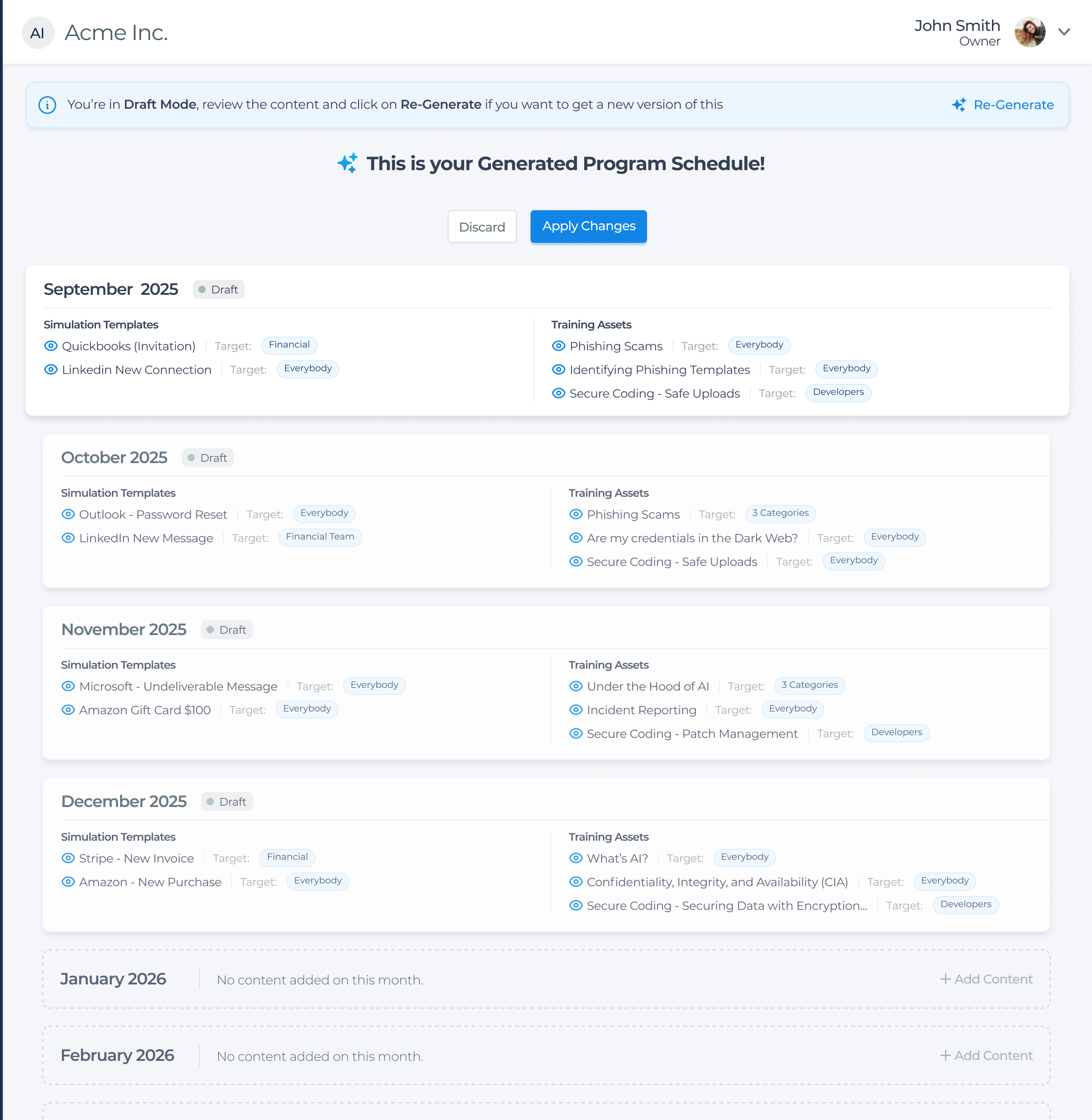
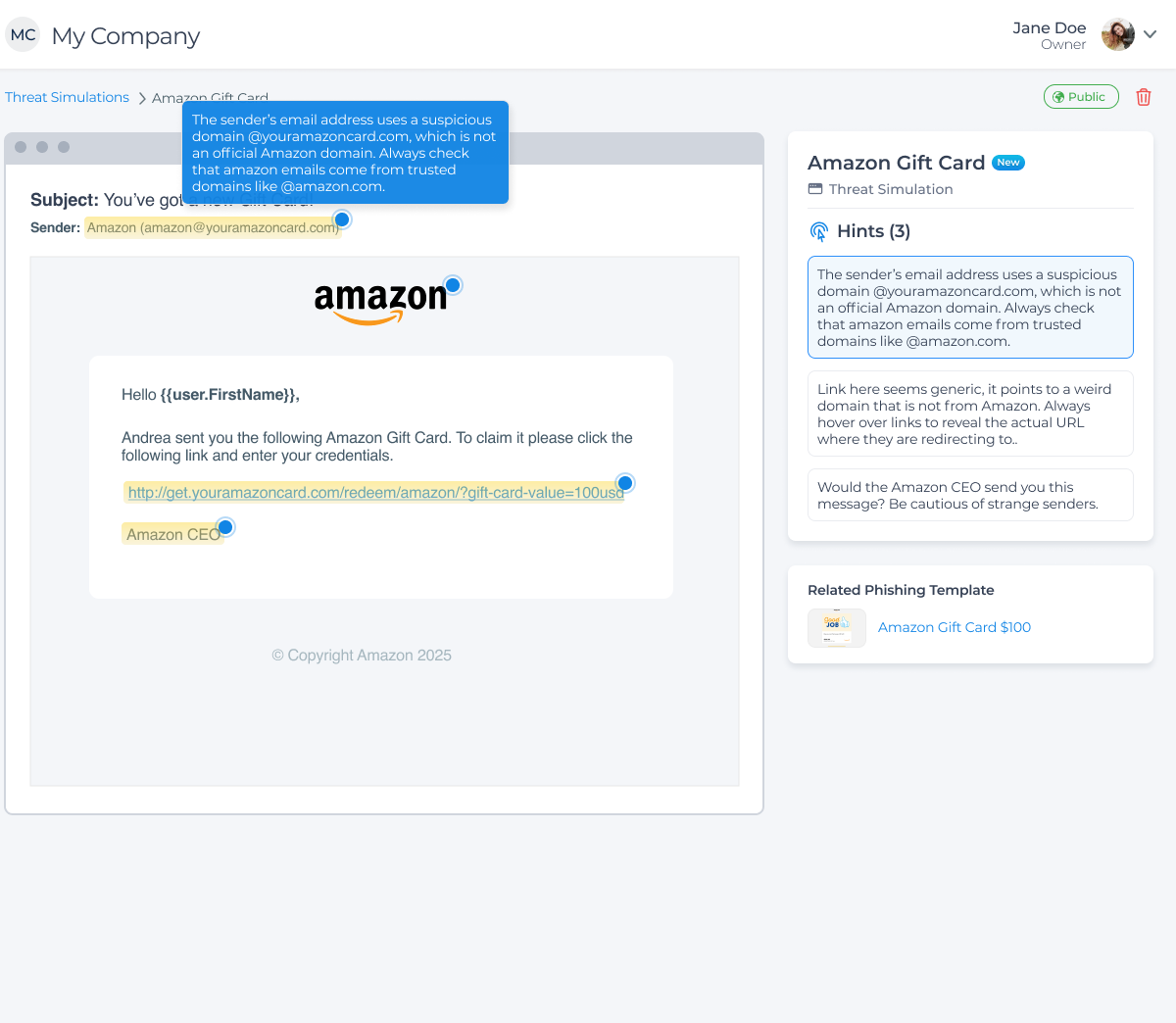
- Threat-Intel-Driven Phishing Simulations: The platform uses real-world threat intelligence to create highly realistic phishing campaigns, moving beyond generic templates to test employees against the actual attacks they are likely to face.
- MSP-Centric Multi-Tenant Platform: Its core architecture is built for MSPs, allowing them to manage multiple client accounts from a single dashboard with separate billing, reporting, and campaign management.
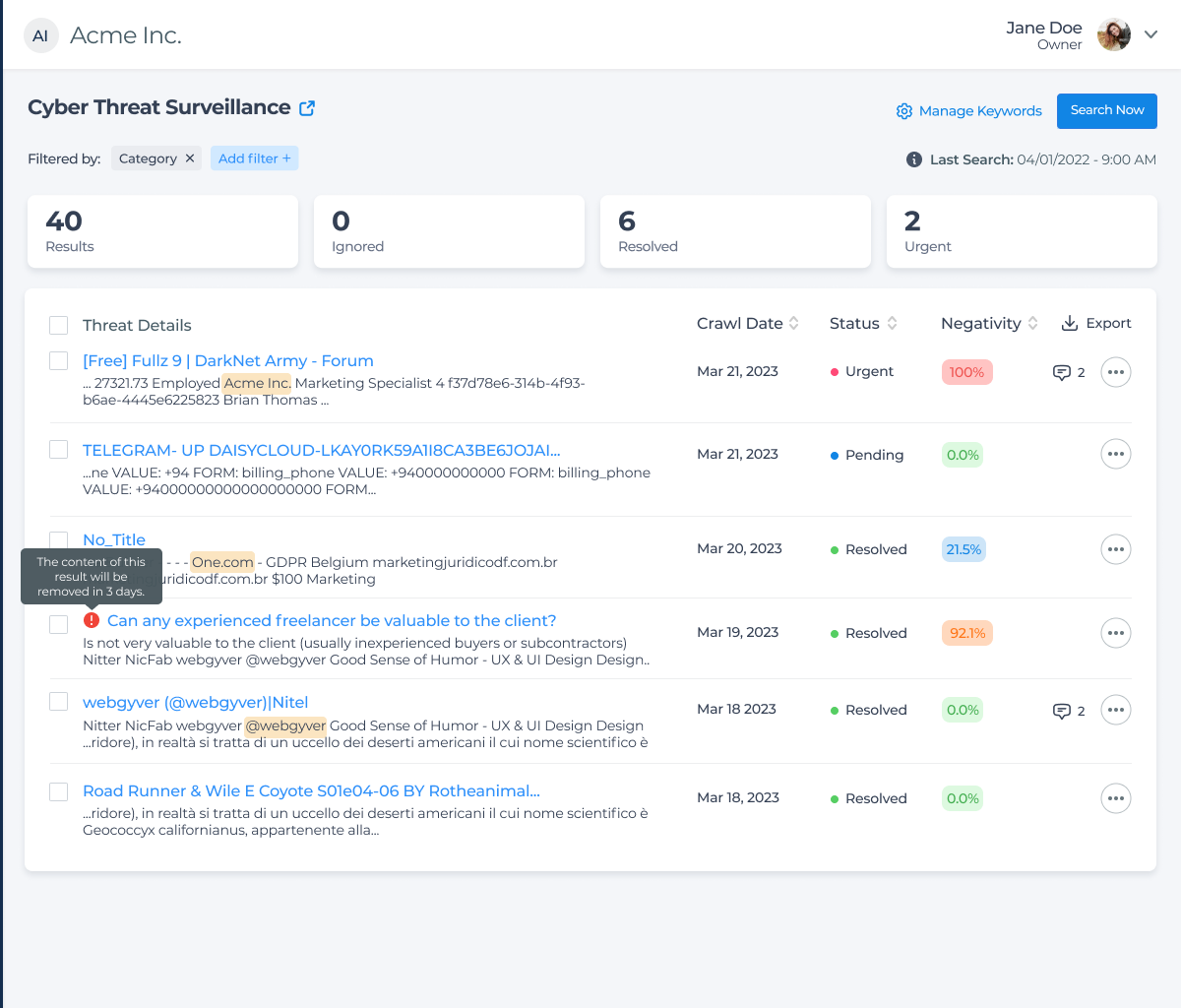
- Proactive Threat Monitoring: Symbol tracks the dark web for compromised employee credentials and scans for newly registered look-alike domains that could be used in spoofing attacks.
- Integrated Training & Policy Management: Symbol combines phishing simulations with a library of short, effective "micro-learning" videos and a system called PolicyPro that distributes and tracks employee acknowledgment of key security policies.
Strengths: Where Symbol Security Shines
- Managed Program Services: For organizations with limited time or expertise, Symbol provides fully managed security awareness training services. This relieves administrative burden, ensures best-practice program execution by experts, and frees internal teams to focus on core business priorities.
- Purpose-Built for the MSP Channel: This is Symbol's game-changing advantage. Features like multi-tenancy and co-branding are not afterthoughts-they are central to the platform. This makes it incredibly easy for MSPs to add security awareness training as a profitable, scalable service.
- Policy Management (Policy PRO): A platform for distributing IT security policies, tracking employee acknowledgment, and collecting electronic signatures. It also enables training to be tied directly to specific policies.
- Simplicity and Ease of Use: The user interface is clean, modern, and intuitive. SMBs and MSPs without a full-time training administrator can create and launch campaigns in minutes, drastically lowering the administrative burden.
- Real-World Threat Intelligence: By basing simulations on active threats, the training becomes more practical and impactful. Employees learn to spot sophisticated lures, not just predictable templates.
Limitations to Consider
- Limited Content Library Breadth: Compared to giants like KnowBe4, Symbol's library of training modules is less extensive. Organizations needing a vast catalog for every niche compliance topic might find it limiting.
- Fewer Advanced Enterprise Features: The platform's focus on simplicity means it lacks some of the highly complex features (like deep API workflows or granular role-based access) required by global enterprises.
Best Use Cases:
Symbol Security is the perfect fit for Managed Service Providers (MSPs) wanting to add a security training service and for Small to Medium-Sized Businesses (SMBs) of 15-1000 employees who need a powerful, no-nonsense solution without the enterprise cost and complexity.
2. KnowBe4
KnowBe4 is the undisputed "Goliath" of the security awareness industry. As the world's largest and most recognized platform, it focuses on helping organizations manage the ongoing problem of social engineering by building a stronger "human firewall." It is known for its massive scale and a feature set designed for enterprise needs.
Key Features of KnowBe4
- Massive Training Content Library: KnowBe4 offers the world's largest library of security awareness training content, including interactive modules, videos, games, and posters in dozens of languages.
- Advanced Phishing & Vishing Simulations: The platform provides thousands of phishing templates, many based on real-world attacks, and offers unique capabilities like "vishing" (voice phishing) simulations.
- PhishER Incident Response: A key add-on, PhishER is a light SOAR tool that helps security teams automatically triage and respond to user-reported phishing emails, closing the defense loop.
- Comprehensive Risk Scoring: KnowBe4 calculates a "Phish-prone Percentage" and an individual "Risk Score" for each user, allowing security teams to identify and focus on high-risk employees.
Strengths: Where KnowBe4 Shines
- Unparalleled Content Variety: The sheer volume of training content is KnowBe4's primary strength. This allows organizations to keep training fresh and cater to a wide range of learning styles and compliance needs.
- Effective, Realistic Simulations: The phishing templates are highly realistic and often based on current events, making them very effective for testing employee resilience.
- Integrated Incident Response: The PhishER platform is a major differentiator, transforming the tool from a simple training platform into a core part of an organization's defense and response strategy.
Limitations to Consider
- Potentially Inconsistent Content Quality: With such a vast library, some users find the quality of modules to be hit-or-miss, with certain content feeling dated or overly simplistic.
- High Cost and Opaque Pricing: KnowBe4 is a premium solution, and its pricing is hidden behind sales calls. The most valuable features are locked in the highest tiers, making it one of the more expensive MetaCompliance competitors.
- Administrative Complexity: The platform's extensive feature set can be overwhelming for smaller teams, requiring a significant and consistent administrative effort to maximize its value.
Best Use Cases:
KnowBe4 is built for the mid-market to large enterprise sector. These organizations have the budget, security maturity, and compliance requirements to justify the investment and leverage its advanced features.
3. Proofpoint
Proofpoint is a cybersecurity heavyweight, best known for its industry-leading email security solutions. Its security awareness training platform, acquired from Wombat Security, is a powerful component of a broader, integrated suite designed to protect organizations from people-centric threats.
Key Features of Proofpoint
- Advanced Threat Protection (TAP): Proofpoint's flagship capability is its email security, which uses advanced sandboxing to detect and block zero-day and polymorphic malware before it reaches the user.
- Integrated Information Protection: The platform includes a robust suite for Data Loss Prevention (DLP), email encryption, and archiving, governed by a single policy engine.
- Security Awareness Training (SAT): The integrated SAT platform allows organizations to run realistic phishing simulations and assign targeted training based on user performance and threat exposure.
- Cloud App Security Broker (CASB): Protection extends beyond email to secure popular cloud applications like Microsoft 365 and Google Workspace from data loss and account compromise.
Strengths: Where Proofpoint Shines
- Unmatched Threat Detection Efficacy: Proofpoint's greatest strength is stopping threats that other systems miss, thanks to its vast threat intelligence graph and best-in-class TAP technology.
- Comprehensive, Integrated Platform: The ability to combine top-tier email security, DLP, and security awareness training under a single vendor reduces complexity and allows threat intelligence to be shared across the platform.
- Exceptional Granularity and Control: The platform offers security professionals an extraordinary level of control to create highly specific rules for filtering, DLP, and encryption.
Limitations to Consider
- High Cost of Ownership: Proofpoint is a premium solution with a premium price tag. The most valuable features are often licensed as separate, expensive add-ons, putting it out of reach for most SMBs.
- Significant Administrative Complexity: The flip side of granular control is complexity. The platform requires skilled, dedicated security personnel to configure, tune, and manage it effectively.
- Dated End-User Experience: While the admin backend is powerful, some end-user-facing elements, like the email quarantine digest, can feel less intuitive than more modern solutions.
Best Use Cases:
Proofpoint is built for large enterprises, Fortune 1000 companies, and government agencies with mature security programs, dedicated security teams, and the budget to invest in a best-in-class solution.
4. Cofense
But what if your goal isn't an all-encompassing security gateway, but rather a focused tool for automating your SOC's phishing response? That's where Cofense comes in. Cofense operates on the principle that some phish will always get through, and it excels at turning trained employees into an active network of threat sensors for the Security Operations Center (SOC).
Key Features of Cofense
- Automated Phishing Threat Triage (Cofense Triage): This is the heart of the platform. It automatically ingests and analyzes user-reported emails, using machine learning to categorize threats and cluster similar attacks, dramatically reducing manual work for the SOC.
- Enterprise-Wide Remediation (Cofense Vision): Once a threat is confirmed, Vision allows security teams to instantly search all mailboxes across the organization and quarantine every instance of the malicious email in near real-time.
- Human-Centric Simulation and Reporting (PhishMe & Reporter): Cofense provides realistic phishing simulations and a simple one-click button for users to report threats, making participation frictionless.
- Crowd-Sourced Threat Intelligence: Data from millions of trained users is analyzed to generate high-fidelity intelligence on active phishing campaigns, often identifying threats before traditional feeds do.
Strengths: Where Cofense Shines
- Powerful SOC Automation: Cofense Triage is exceptionally effective at reducing the manual analysis burden on security teams, freeing up skilled analysts to focus on real threats and reducing response times.
- Actionable, Human-Sourced Intelligence: Cofense excels at turning noisy user reports into a high-fidelity intelligence source, providing a unique view of threats that have already bypassed technical defenses.
- End-to-End Phishing Defense Lifecycle: The platform provides a seamless, closed-loop workflow from training and reporting to analysis and remediation.
Limitations to Consider
- Premium Pricing Model: Cofense is a top-tier, premium solution, and its cost can be a significant barrier for organizations without large security budgets.
- Not a Full SEG Replacement: The platform is designed to complement, not replace, a Secure Email Gateway like Proofpoint. You will still need a separate solution for spam and virus filtering.
- Requires a Mature Security Team: To realize its full value, an organization needs a dedicated SOC or incident response team that can manage the platform and act on the intelligence it provides.
Best Use Cases:
Cofense is targeted at mid-to-large enterprises with a mature security posture and a dedicated Security Operations Center (SOC) that is overwhelmed by the volume of user-reported phish.
5. Hoxhunt
Shifting from SOC automation to user engagement, Hoxhunt presents itself as a human risk management platform focused on driving behavioral change. It moves beyond simple compliance training by using a continuous, personalized, and highly gamified experience to make security an engaging and positive habit.
Key Features of Hoxhunt
- Gamified, Personalized Learning: This is Hoxhunt's standout feature. Users receive a steady stream of personalized phishing simulations and earn stars and climb leaderboards for correctly reporting them, creating a positive feedback loop.
- AI-Powered Simulation Engine: Rather than static templates, Hoxhunt uses an AI engine to generate a vast variety of realistic simulations that mimic current, real-world attack trends.
- Integrated Threat Reporting: A single button in the email client allows users to report both simulated phishes and real suspicious emails, turning the entire workforce into a distributed threat sensor network.
- Actionable Human Risk Metrics: The dashboard focuses on metrics that track behavioral change, such as reporting rates and accuracy, providing measurable proof of ROI.
Strengths: Where Hoxhunt Shines
- Exceptional User Engagement: Hoxhunt excels at making security training fun rather than a chore. The game-like mechanics and positive reinforcement lead to higher participation and foster a better security culture.
- Highly Realistic and Adaptive Training: The AI-driven, personalized approach ensures that training remains effective against evolving, sophisticated attacks, adapting to each individual's performance.
- Streamlines SOC Workflows: The platform automatically analyzes real reported threats and can help security teams by orchestrating responses, such as removing similar emails from other inboxes.
Limitations to Consider
- Premium Pricing Model: The advanced, gamified approach comes at a higher cost compared to more basic security awareness training platforms.
- Gamification May Not Suit All Cultures: The competitive, game-like nature might not resonate with every corporate environment or individual.
- Narrower Content Focus: Hoxhunt is hyper-focused on phishing prevention. Competitors like KnowBe4 offer a much broader library of traditional compliance and general security training content.
Best Use Cases:
Hoxhunt is best for mid-market to large enterprises that want to move beyond compliance and foster a proactive security culture. It is ideal for organizations seeking to achieve measurable, lasting behavioral change through engagement.
6. SANS Security Awareness
Finally, we arrive at the "gold standard" for content quality. SANS Security Awareness is the training branch of the SANS Institute, one of the most authoritative organizations in all of cybersecurity. Its platform is a premium, expert-driven solution that prioritizes content quality and a strategic approach to managing human risk.
Key Features of SANS Security Awareness
- Expert-Authored, Story-Based Content: Training modules are developed by world-class SANS instructors and often presented in a narrative, "Hollywood-style" video format to make complex topics memorable.
- Strategic Human Risk Management Framework: SANS offers a "Security Awareness Maturity Model" to help organizations assess their program, set goals, and measure progress in a structured, strategic way.
- Advanced Phishing Simulation (PhishPro): The platform includes a robust phishing tool with templates based on real-world attacks identified by SANS's global threat intelligence network.
- Comprehensive Reinforcement Materials: SANS provides a rich ecosystem of newsletters, posters, and games designed to keep security top-of-mind all year long.
Strengths: Where SANS Security Awareness Shines
- Unmatched Content Authority and Quality: This is SANS's primary advantage. The content is sourced directly from the forefront of cybersecurity research, making it the gold standard for organizations that prioritize accuracy and credibility.
- Focus on Measurable Behavioral Change: The methodology and Maturity Model are built to drive and measure a shift in security culture, focusing on long-term risk reduction.
- Exceptional Brand Recognition and Trust: Deploying a SANS program signals a serious commitment to security, which helps security leaders gain executive buy-in and demonstrate due diligence to auditors.
Limitations to Consider
- Highest Price on the Market: SANS Security Awareness is one of the most expensive solutions available, making it a non-starter for most SMBs or organizations with tight budgets.
- Smaller Content Library Volume: While the quality is supreme, competitors like KnowBe4 offer a much larger quantity of training modules.
- Less Emphasis on Gamification: The tone is more professional and serious. Organizations seeking a lighthearted or highly competitive experience may find the approach too formal.
Best Use Cases:
SANS is the ideal choice for large enterprises in highly regulated industries (finance, defense, energy) with mature security programs and a budget to match. It is for leaders who view security awareness as a critical control and want to leverage the SANS brand for authority.
How to Choose the Right MetaCompliance Alternative for You
Choosing the right platform is about aligning a tool's strengths with your organization's specific needs. Use this guide to help you make your decision.
- If You're an MSP: You need a multi-tenant, co-brandable platform designed for resale that is easy to manage across dozens of clients. Symbol Security is built from the ground up for exactly this purpose, making it the clear choice.
- If You're a Budget-Conscious SMB: You need transparent pricing, a low administrative burden, and an effective solution that doesn't break the bank. Symbol Security's generous free tier and clear, public pricing make it the obvious and most accessible starting point.
- If You're a Large Enterprise with a Big Budget: You have options. For the largest possible content library and a massive brand name, look at KnowBe4. For a fully integrated email security and threat protection suite, consider Proofpoint.
- If Your Priority is SOC Automation: Your security team is drowning in user-reported phishing emails and needs to automate the response. Cofense is designed specifically to solve this problem.
- If You Need Maximum Content Authority: Your priority is having the most defensible, expert-backed training for compliance or executive buy-in. SANS is the choice, provided you have the significant budget required.
Picking The Right MetaCompliance Alternative for You
While MetaCompliance is a capable platform, the "best" security awareness training solution truly depends on your organization's size, budget, and security maturity. The landscape of MetaCompliance competitors is diverse, offering incredible opportunities for growth and improvement.
For large enterprises, powerhouses like KnowBe4 and Proofpoint offer immense scale and integrated threat protection. Specialized tools like Cofense and Hoxhunt provide innovative solutions for SOC automation and user engagement, respectively. However, these platforms often come with enterprise-level price tags and complexity that can be overwhelming for smaller teams.
This is where the choice becomes clear. For the vast majority of Managed Service Providers and Small to Medium-Sized Businesses, Symbol Security offers an unparalleled combination of MSP-centric features, intuitive ease of use, and transparent, fair pricing. It delivers the powerful, real-world training you need to build a strong human firewall without the enterprise overhead.
Ready to see how a human-centric security platform can protect your organization without the enterprise price tag? Start for free with Symbol Security today.